Do your pediatric patients struggle with adherence?
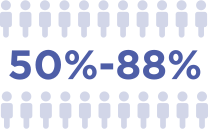
Approximately 63% of children and adolescents who have a chronic illness are prescribed medication, but 50%-88% of children are not adherent to prescription medications13
Help Eliminate Barriers to Adherence
Strategies to help improve adherence include pleasant-tasting medications and liquid formulations7,8,14
Liquids are easy to swallow and often preferred by children and elderly or debilitated adults8
A sweet taste may help patients who struggle taking medication7
Ready-to-use liquids provide convenient dosing for patients and caregivers7,8
Liquid formulations may help eliminate barriers to adherence7,14
References:
1. Flynn JT, Kaelber DC, Baker-Smith CM, et al; Subcommittee on Screening and Management of High Blood Pressure in Children. Clinical practice guideline for screening and management of high blood pressure in children. Pediatrics. 2017;140(3):e20171904. 2. Katerzia [package insert]. Woburn, MA: Azurity Pharmaceuticals, Inc; 2023. 3. Qbrelis [package insert]. Woburn, MA: Azurity Pharmaceuticals, Inc; 2023. 4. Drugs@FDA: FDA-Approved Drugs. Search term: lisinopril. US Food and Drug Administration. https://www.accessdata.fda.gov/scripts/cder/daf/index.cfm?event=BasicSearch.process. Accessed March 12, 2026. 5. Gutierrez-Colina AM, Smith AW, Mara CA, Modi AC. Adherence barriers in pediatric epilepsy: from toddlers to young adults. Epilepsy Behav. 2018;80:229-234. 6. Bhosle M, Benner JS, DeKoven M, Shelton J. Difficult to swallow: patient preferences for alternative valproate pharmaceutical formulations. Patient Prefer Adherence. 2009;3:161-171. 7. Chappell F. Medication adherence in children remains a challenge. Prescriber. 2015;26(12):31-34. 8. Zajicek A, Fossler MJ, Barrett JS, et al. A report from the Pediatric Formulations Task Force: perspectives on the state of child-friendly dosage forms. AAPS J. 2013;15(4):1072-1081. 9. Bachynsky J, Wiens C, Melnychuk K. The practice of splitting tablets: cost and therapeutic aspects. Pharmacoeconomics. 2002;20(5):339-346. 10. Gill D, Spain M, Edlund BJ. Crushing or splitting medications: unrecognized hazards. J Gerontol Nurs. 2012;38(1):8-12. 11. US Food and Drug Administration. Guidance for Industry. Tablet Scoring: Nomenclature, Labeling, and Data for Evaluation. March 2013. 12. US Department of Health and Human Services. National Institutes of Health. Best Pharmaceuticals for Children Act (BPCA) Priority List of Needs in Pediatric Therapeutics. https://www.nichd.nih.gov/sites/default/files/inline-files/2020PriorityListFeb20.pdf. Accessed March 12, 2026. 13. McGrady ME, Hommel KA. Medication adherence and health care utilization in pediatric chronic illness: a systematic review. Pediatrics. 2013;132(4):730-740. 14. Matsui D. Current issues in pediatric medication adherence. Pediatr Drugs. 2007;9(5):283-288. 15. Gudeman J, Jozwiakowski M, Chollet J, Randell M. Potential risks of pharmacy compounding. Drugs R D. 2013;13(1):1-8. 16. Allen LV Jr. Amlodipine 1 mg/mL oral liquid. US Pharm. 2014;39(2):55-56. 17. Lisinopril 1-mg/mL oral liquid. Int J Pharm Compound. 2006;10(4):302. 18. US Government Accountability Office. Compounded Drugs: Payment Practices Vary Across Public Programs and Private Insurers, and Medicare Part B Policy Should be Clarified. Report GAO-15-85. October 2014. https://www.gao.gov/products/gao-15-85. Accessed March 12, 2026. 19. US Food and Drug Administration. Compounded Drug Products That Are Essentially Copies of a Commercially Available Drug Product Under Section 503A of the Federal Food, Drug, and Cosmetic Act: Guidance for Industry. January 2018. 20. Watson CJ, Whitledge JD, Siani AM, Burns MM. Pharmaceutical compounding: a history, regulatory overview, and systematic review of compounding errors. J Med Toxicol. 2021;17(2):197-217. 21. Sellers S, Utian WH. Pharmacy compounding primer for physicians: prescriber beware. Drugs. 2012;72(16):2043-2050. 22. Report: limited FDA survey of compounded drug products. US Food and Drug Administration website. https://www.fda.gov/drugs/human-drug-compounding/report-limited-fda-survey-compounded-drug-products. Accessed March 12, 2026.